
The Benefits of Jigsaw Puzzles for Children
Boosting Cognitive Development
Jigsaw puzzles for children have been a popular pastime for generations, and for good reason. They provide a variety of cognitive benefits for children of all ages. In this post, we’ll explore some of the ways that children can benefit from playing with jigsaw puzzles, and why parents and caregivers should consider incorporating them into their child’s playtime.
- Enhancing Problem-Solving Skills
- Building Fine Motor Skills
- Promoting Patience and Perseverance
- Fostering Creativity and Imagination
- Promoting Social Interaction
——————————-
Enhancing Problem-Solving Skills:
How Jigsaw Puzzles Help Kids Think Critically
One of the most obvious benefits of jigsaw puzzles for children is the way they enhance problem-solving skills. As children work to fit the pieces of a puzzle together, they’re forced to think critically and use logic to figure out where each piece belongs. This helps to develop important cognitive skills that will serve them well in school and in life.
Building Fine Motor Skills:
How Children’s Jigsaw Puzzles Help Kids with Hand-Eye Coordination
Another benefit of jigsaw puzzles for children is the way they help to build fine motor skills. As children handle the small puzzle pieces, they’re also working on their hand-eye coordination, which is an important skill for everything from writing to sports. Children’s jigsaw puzzles for kids are specially designed for little hands, which makes them a great tool for developing these skills.
Promoting Patience and Perseverance:
How Jigsaw Puzzles Teach Kids to Stick with a Challenge
Jigsaw puzzles for kids can also help children learn important life skills like patience and perseverance. It can be frustrating to work on a puzzle for a long time and not see results right away, but the sense of accomplishment that comes from finally completing the puzzle is well worth it. Through this experience, children learn that good things come to those who work hard and stick with a challenge.
Fostering Creativity and Imagination:
How Jigsaw Puzzles Inspire Kids to Think Outside the Box
Finally, jigsaw puzzles can also help to foster creativity and imagination in children. As children work on a puzzle, they’re encouraged to think outside the box and come up with new and innovative ways to fit the pieces together. This can help to develop their creativity and inspire them to think more creatively in other areas of their lives as well.
Promoting Social Interaction:
How Jigsaw Puzzles Bring Families and Friends Together
Jigsaw puzzles for children can also serve as a great way to promote social interaction. Whether it’s working on a puzzle with siblings, parents or friends, the activity encourages teamwork and communication. As children work together to complete the puzzle, they learn to share ideas, take turns and collaborate. This can help to foster strong relationships and create a positive atmosphere among family and friends.
——————————-
In conclusion, jigsaw puzzles for children are not just a fun pastime, but also a tool to enhance many cognitive and life skills. They are available in a variety of themes, sizes and levels of difficulty, making them suitable for children of all ages and abilities. So next time you’re looking for a fun and educational activity for your child, consider a jigsaw puzzle!
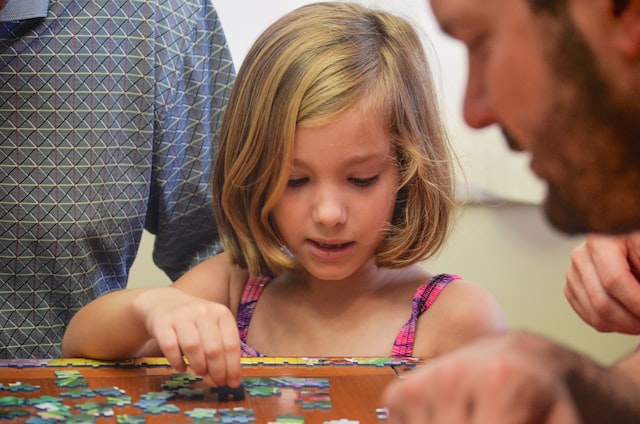
Explore the benefits of Jigsaw Puzzles for Children


